Why We Built Custom Hardware
The first question we get when people learn Stima builds its own hardware: why not use a commodity OBD-II dongle plus a SIM card? The economics seem obvious — off-the-shelf hardware costs $20–$40 and requires no manufacturing investment. The problem is that commodity OBD-II dongles weren't designed for the use case we're trying to solve, and the gap between what they provide and what we need is fundamental.
Commodity dongles are designed for passenger car diagnostics in climates where the vehicle spends most of its time between 10°C and 40°C. They communicate via Bluetooth to a nearby phone, which handles cloud connectivity. They sample data at intervals measured in seconds. They don't provide CAN bus direct access for non-OBD-II-compliant battery monitors. They don't have local storage for 72 hours of telemetry. They don't have the thermal design margins needed to operate in the battery compartment of an EV motorcycle in Lagos in July.
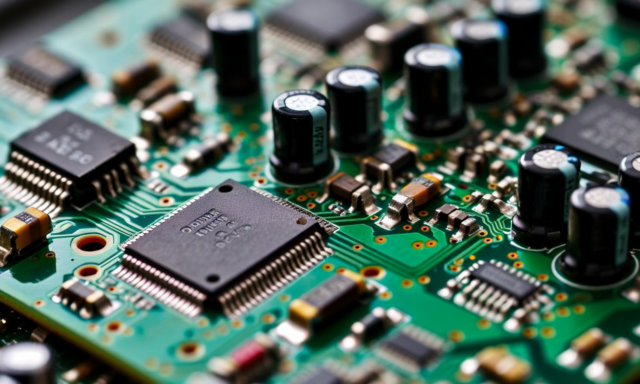
The SEM-1 is purpose-built for battery health monitoring in high-temperature, intermittent-connectivity environments. Every component choice reflects one of three design criteria: thermal survival, connectivity resilience, or measurement accuracy. Here's the teardown.
The MCU: STM32F446RE
The central processor is the STMicroelectronics STM32F446RE, an ARM Cortex-M4F core running at 180MHz with 512KB flash, 128KB SRAM, and a hardware floating-point unit. We chose this over the initially considered STM32F4 series for two reasons: the M4F's DSP instructions run the Kalman filter matrix operations approximately 35% faster than a non-FPU M4, and the RE variant has two hardware CAN controllers — one for the primary BMS bus, one reserved for multi-bus vehicle architectures.
The STM32F446 is rated to 85°C operating temperature in the LQFP64 package we use. In testing, the MCU die temperature in our worst-case thermal scenario — a fully assembled SEM-1 in a test chamber at 65°C ambient, with the modem and BQ76952 both active — peaked at 78°C. We have 7°C margin before the datasheet's rated max. That margin is deliberately conservative; we've seen the interior of a Bajaj RE Electric battery compartment reach 68°C on a Lagos afternoon, so the 65°C test chamber scenario isn't worst-case for field conditions.
Power consumption in active mode (modem transmitting) is approximately 280mA at 5V. In sleep mode (between sampling intervals), the MCU and BQ76952 drop to a combined 12mA. The modem accounts for most of the active mode current draw — the Quectel EC21 peaks at 450mA during LTE transmission. The SEM-1 draws power from the vehicle's 12V or 24V auxiliary bus through a switching regulator (Texas Instruments TPS54360) that maintains 5V ±2% from 7V to 30V input, covering the voltage range of both 12V and 24V nominal vehicle electrical systems with headroom for voltage transients during motor controller switching.
The Modem: Quectel EC21-AF
Cellular connectivity is via a Quectel EC21-AF LTE Cat 1 module. Cat 1 provides download speeds up to 10 Mbps and upload up to 5 Mbps — far more than our telemetry upload requirements, which peak at about 8 kbps per vehicle under normal operating conditions. We chose Cat 1 rather than Cat-M1 or NB-IoT for two reasons: coverage and latency.
Cat-M1 and NB-IoT are low-power wide-area technologies that theoretically offer better coverage in rural areas and lower power consumption. In practice, Cat-M1 and NB-IoT network rollout in Sub-Saharan Africa is limited to major urban areas — exactly the areas where 4G Cat 1 is already available. For the routes where we need connectivity most (semi-rural, peri-urban), Cat-M1 has no advantage. The EC21 also includes fallback to 3G and 2G, which ensures connectivity even in minimal-coverage areas at reduced throughput.
The EC21-AF variant is the Africa-region SKU, pre-approved for type acceptance in Kenya (CA), Nigeria (NCC), Uganda (UCC), Ghana (NCA), and South Africa (ICASA). Using a region-pre-approved modem variant avoids per-country type approval applications, which can take 3–12 months per country and require in-country testing with authorized labs. The hardware design investment in the correct modem variant pays back in time-to-market across multi-country deployments.
The Battery Monitor IC: TI BQ76952
Battery cell-level data is acquired by the Texas Instruments BQ76952, a 16-cell battery monitor IC with integrated coulomb counter, cell voltage measurement (±1.5mV accuracy), temperature measurement via up to 9 thermistors, and programmable protection logic. In the SEM-1, the BQ76952 connects to the battery pack's cell voltage tap points and thermistor outputs via a 20-pin flex cable harness included in the installation kit.
The BQ76952 communicates with the MCU via I2C at 400 kHz. Each 100ms, the MCU polls the BQ76952 for a full cell voltage scan (time to complete: approximately 14ms) and temperature readings from active thermistors. The coulomb counter provides continuous current integration between polls, giving the Kalman filter accurate charge/discharge current data for SOC estimation.
A key decision: the BQ76952 is rated to 70°C operating temperature. At first glance this seems like a weak point in our thermal design given the 65°C ambient test scenario. The BQ76952 operates close to the battery pack, however, which is thermally isolated from the SEM-1 main PCB. The cell voltage tap points and thermistor connections are the only electrical path between the pack and the IC. In practice, the BQ76952 die temperature in our thermal test stayed below 58°C — well within the 70°C rating — because the connection harness provides thermal isolation through its wire length.
Local Storage: 4MB NOR Flash
The 72-hour offline buffer lives in a Winbond W25Q32JV 4MB NOR flash chip connected via SPI at 40 MHz. The ring buffer implementation uses 4KB erase sectors, with a two-pointer (head/tail) scheme that maintains wear leveling across the chip. At the SEM-1's telemetry sampling rate (60 seconds for cloud-eligible readings, 100ms for local anomaly detection), 4MB holds approximately 96 hours of standard telemetry at 22 channels per sample — more than the 72-hour design target.
NOR flash was chosen over the more common NAND flash for its byte-addressable random read capability, which allows the modem upload task to read individual records out of the buffer without staging them through MCU RAM. With 128KB of MCU SRAM shared among all tasks, minimizing buffer staging overhead matters. The tradeoff is that NOR flash is more expensive per byte — the W25Q32JV costs approximately $1.20 per unit versus $0.40 for equivalent NAND capacity.
The W25Q32JV is rated to 85°C extended operating temperature, above any temperature we've measured in field deployment. Endurance is rated at 100,000 erase cycles per sector. At our write rate, the most frequently written sectors complete one erase cycle approximately every 18 months. Estimated flash endurance far exceeds the SEM-1's planned service life of 5 years.
PCB Design and Conformal Coating
The SEM-1 PCB is a 4-layer design (signal, power, ground, signal) on FR4 substrate, 1.6mm thickness. The layout separates the analog measurement front-end (BQ76952 voltage measurement circuits) from the digital logic and modem to minimize analog noise coupling. The modem antenna connection uses a short 50-ohm microstrip trace to a u.fl connector on the PCB edge, where an external cellular antenna attaches via a short coaxial cable.
After PCB assembly and testing, each SEM-1 receives a conformal coating application — a thin layer of acrylic polymer sprayed over the PCB surface that prevents condensation-related corrosion on connector pads and component leads. The coating is applied to both sides and cured at 50°C for 30 minutes. The antenna connector, USB port, and SIM card holder are masked before coating to preserve their mechanical function. Conformal coating adds approximately $4 per unit in material and labor but is not optional for hardware that will operate in the temperature and humidity cycles of East and West African coastal environments.
Filed under: Hardware, Engineering · Back to Blog